FLEET & DEPOT CHARGING
Charging Built Around the Fleet Schedule, Not the Charger Catalogue.
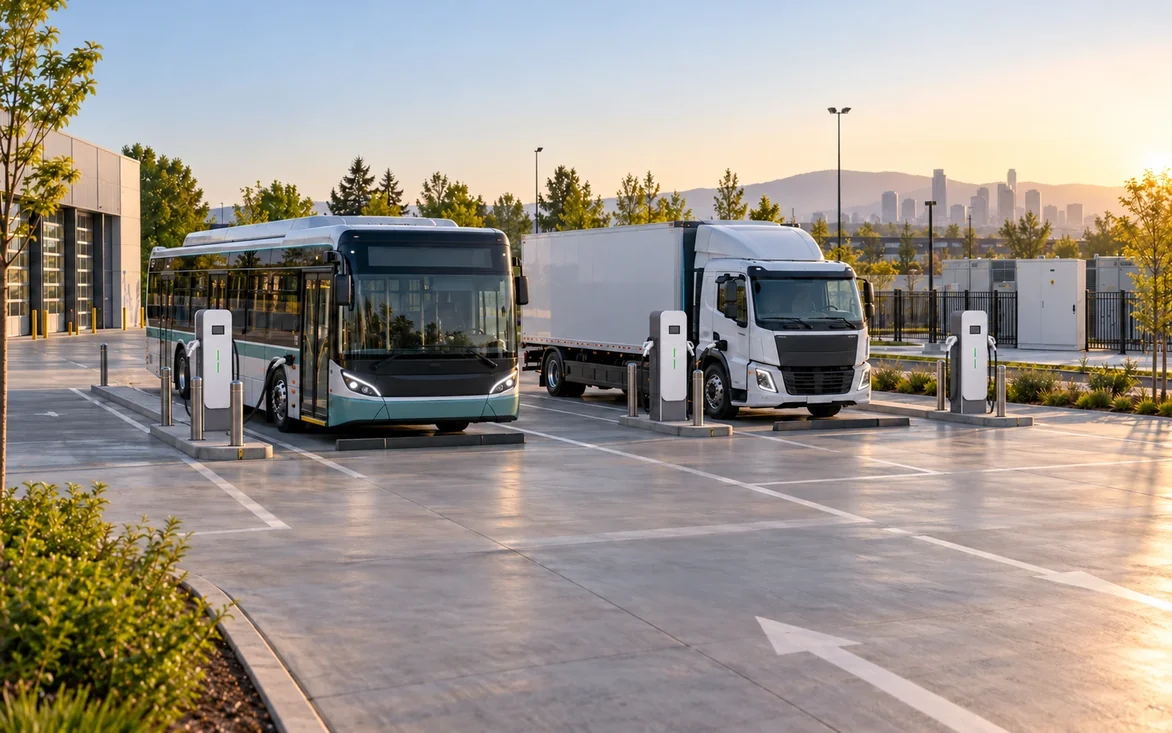
Fleet charging is a scheduling and power-allocation problem. Vehicle arrival times, battery state, next dispatch, available grid capacity and simultaneous charging demand all shape the right system.
DEPOT DESIGN INPUTS
The Fleet Schedule Defines the Charging System.

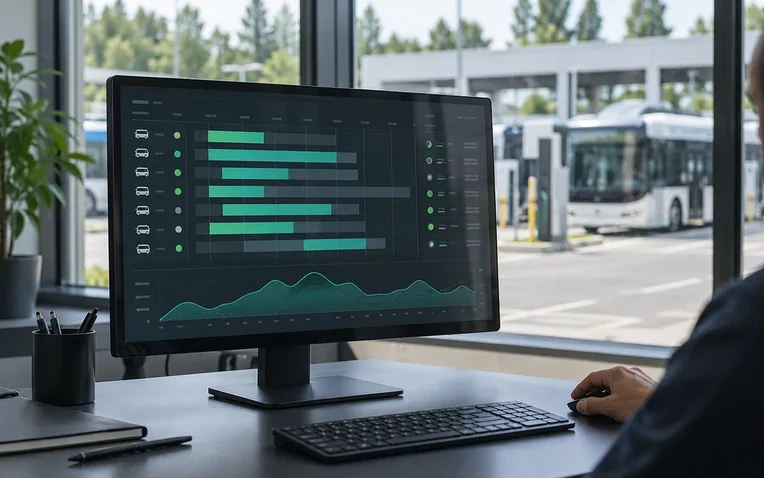
Charging Window
Overnight, shift-change and opportunity charging lead to different power and charger-quantity requirements.
Fleet Mix
Ride-hailing cars, vans, buses and heavy trucks can require different connectors, current levels, bay layouts and charging strategies.
Energy per Vehicle
Battery size, arrival state of charge and next-dispatch target determine how much energy each vehicle must receive in the available window.
Power Management
When grid capacity is limited, charging priority and load management can be more valuable than simply increasing installed charger power.
Fleet and Depot Architecture
- 01Grid / Transformer
- 02Site Distribution
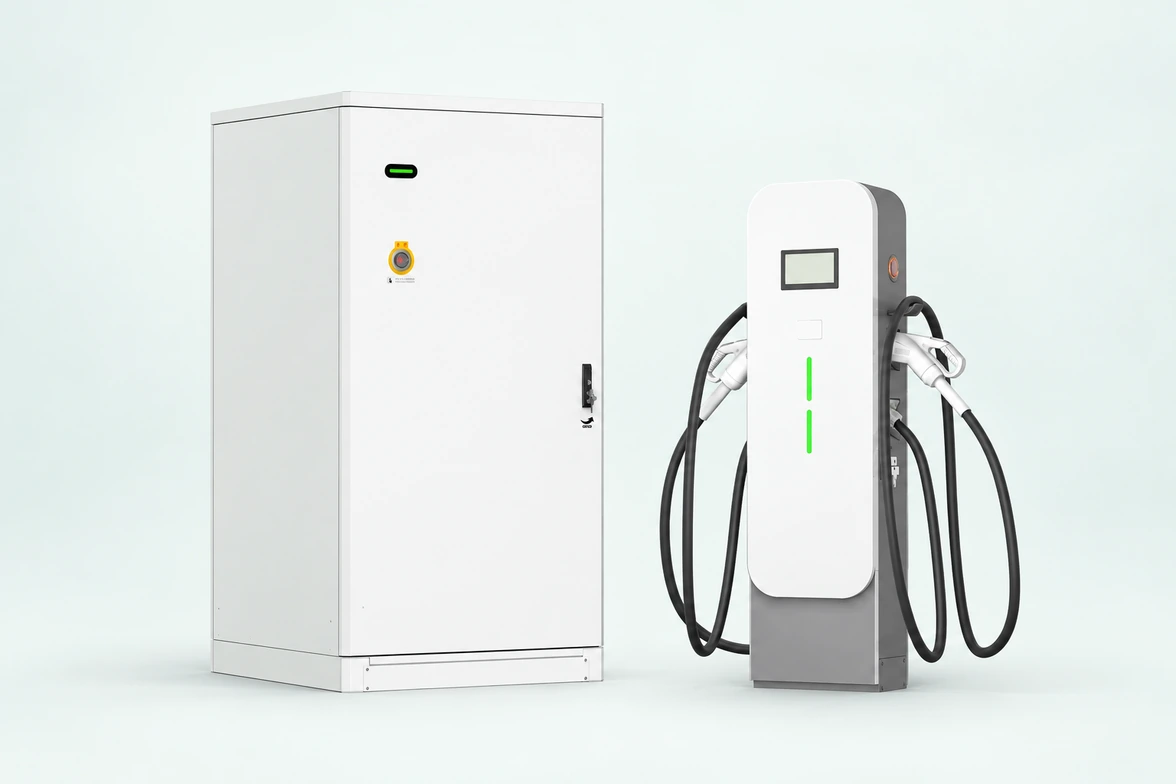
- 03Integrated DC or Split High-Power System
- 04Charging Bays
- 05Fleet Scheduling / Load Management
From 120kW Fleet Charging to High-Power Depot Systems.
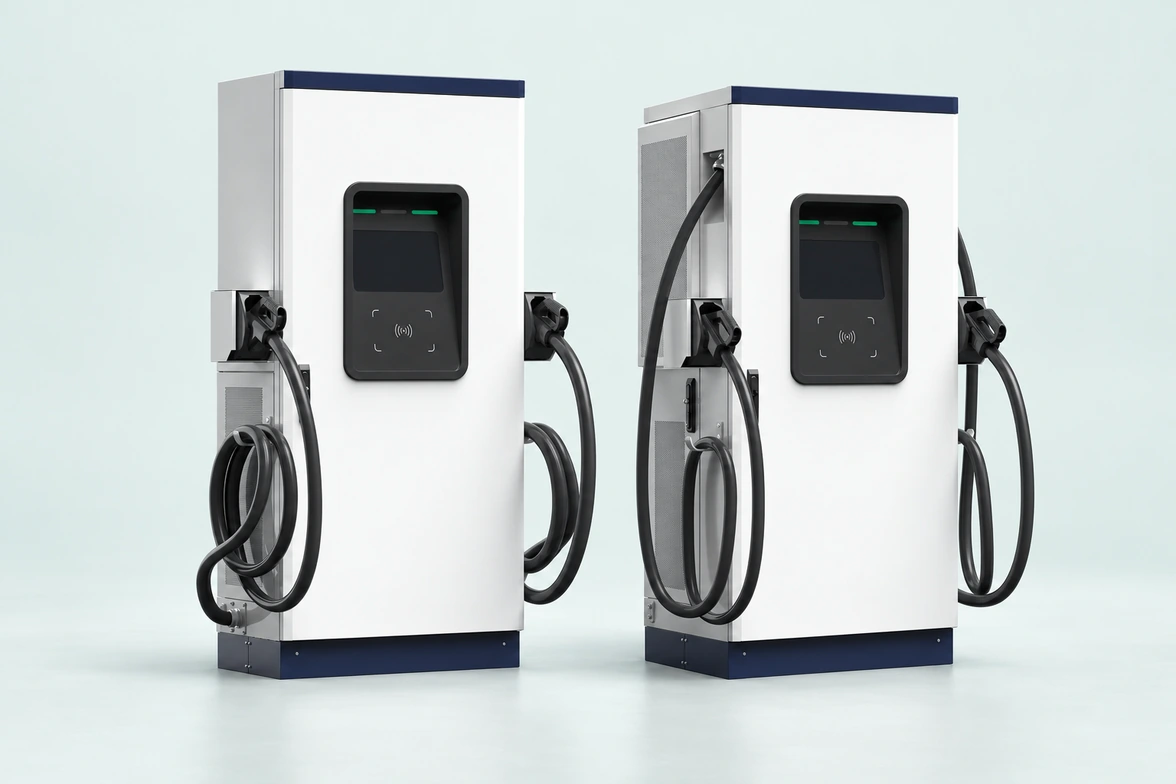
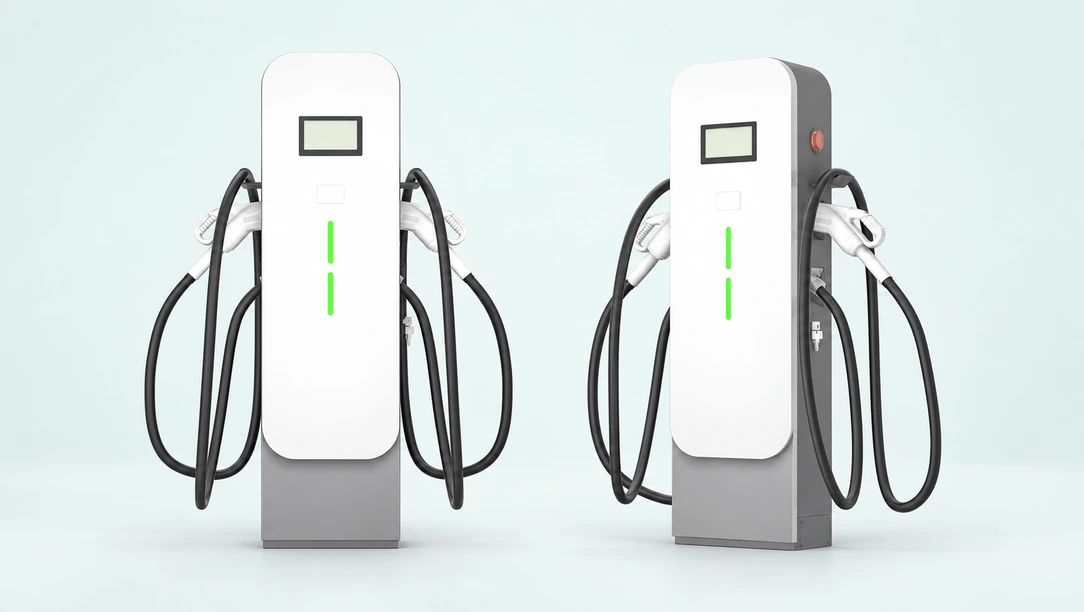
Passenger-car and light-commercial fleets may use 120–480kW integrated DC. Bus and heavy-truck depots can require split high-power systems, multiple dispensers and a more engineered site architecture. The correct solution depends on actual vehicle charging capability, schedule and available site power.
Operational Questions to Resolve Early
Priority
Which vehicles must leave first, and which charging sessions can be delayed or power-limited?
Redundancy
How much charger availability is required to protect the dispatch plan when one bay or unit is unavailable?
Expansion
Should the first phase reserve electrical capacity, civil works or space for future vehicles and charging bays?
Information We Need
Share the fleet size, vehicle type, battery size, charging capability, arrival and dispatch schedule, daily mileage, connector requirement, available site power and expansion plan. We can then narrow down the charger quantity, power level and system architecture.
Frequently Asked Questions
How Do We Size the Depot Without Oversizing Every Charger?
Start with the energy each vehicle needs before its next dispatch, the available charging window and the number of vehicles that must charge at the same time. Power allocation can then be designed around the real peak.
When Should a Fleet Move to Split High-Power Charging?
Split architecture becomes relevant when vehicle power demand, simultaneous charging, dispenser layout or future depot scale makes a centralized power system more practical than individual integrated chargers.
Recommended Products & Services